

The Importance Of Search Engine Optimisation
Search Engine Optimisation is the process of selectively enhancing your website content and structure to adhere to popular search engine conventions and standards.
Why SEO is so Important!
Search Engine Optimisation or SEO for short, is the process of selectively enhancing/improving your website content/structure to adhere to popular search engine conventions/standards. With this purpose in mind, structuring your website around SEO helps to organically increase your rankings on search engines such as google. Not to mention, drive more visitors to your website. Consequently, without correct SEO site structure, your website could perform poorly. Thus, driving less visitors towards your website.
Basically, you have two types of SEO: on-site and off-site. On-site SEO refers to the design and structure of the content on the website and the website itself. For example, use of keywords, correct heading usage, alt image text to mention a few. Whereas, off-site SEO refers to all the improvements that can be made in addition to your website. For example, positive reviews, business listings and linked sites/articles to name a few.
Basic Search Engine Optimisation Checklist
Keywords
You’ll want to evenly distribute keywords throughout your content. What’s more, you’ll want to make sure each page content is a minimum of 300 words. However, you don’t want to over-optimise by saturating your content with keywords. Doing so will negatively impact your SEO.
Mobile Responsiveness
The majority of your website visitors will visit your site on a mobile device. For this reason, you must ensure your site is designed and optimised for mobile web browsing. Otherwise, a poorly designed mobile website will rank low on google search.
Website Performance
Similarly, a quick loading, fast website will perform better on search engines. In particular, you’ll want your page-load time to be as quick as possible. This can be achieved by compressing images, lazy-loading images and reducing the amount of scripts/styles to name a few.
Image Alt Tags
Probably the easiest is to include alternative text on all images. Not only does this improve SEO, but this makes your website more accessible for screen readers and voice over.
Headings
Correct heading usage lets search engines know how to interpret your website’s content. In particular, a general rule is to only have one H1 heading per page and to keep your headings in sequential order (H1 to H6).
Secure SSL
Ensuring your website is served with a secure SSL connection is very important. Not only does this improve SEO but it improves your website’s security and protects visitors’ data.
Related posts
Continue reading
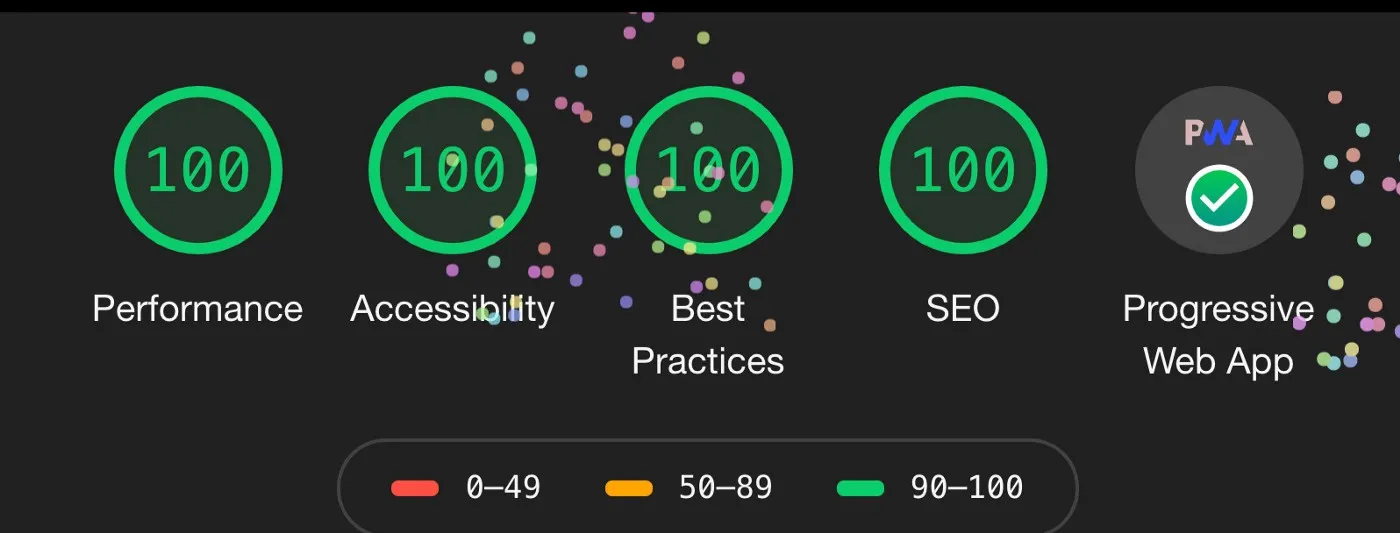
Always Lighthouse Speed Test Your Website
The Lighthouse Speed Test is a crucial part of website analysis and performance. Not to mention, it's a vital part of improving your website's SEO.

Install Wildcard SSL Certificate with Cloudflare using Certbot on Ubuntu 20.4 with Nginx
How to install and configure the dns-cloudflare Certbot plugin, generate a wildcard Cloudflare certificate, and configure Nginx vhosts to use that single certificate.